
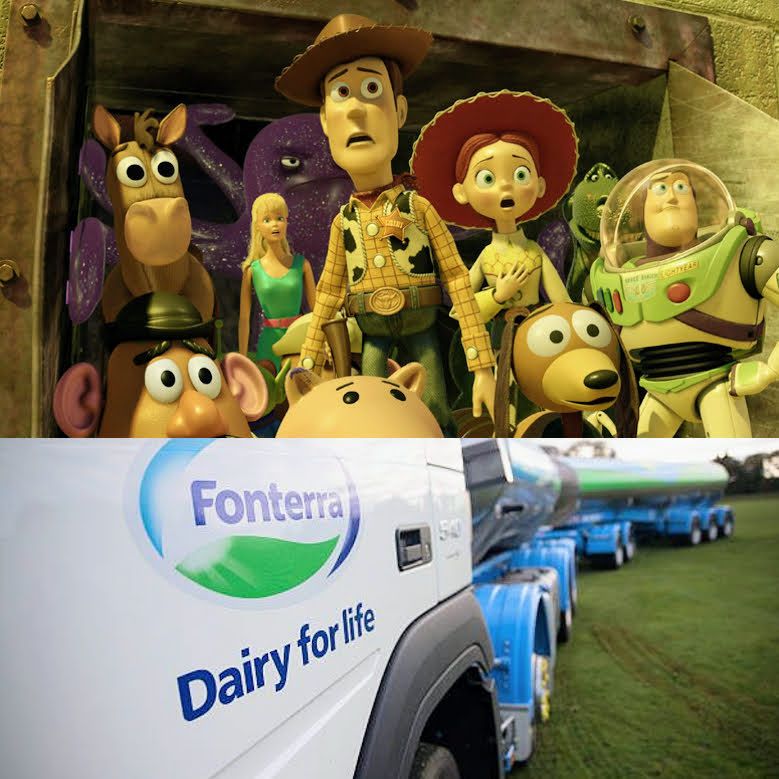
Somewhere in a boardroom, far from a paddock, Fonterra handed over the keys to its childhood.
Mainland. Anchor. Fresh’n Fruity. The toys are packed in a box, the marker pen says “Lactalis Group,” and the farmers and their collective (our Andys) have waved goodbye.
For Fonterra it’s not a hostile sale, but it is bittersweet. It’s a sale that promises to “look after them” and we’re all collectively hoping they mean it… but deep down, we all sort of know they just won’t look after Woody and Buzz the way we did.
After decades of building, milking, branding and believing, the co-op that gave New Zealand its most familiar dairy faces decided it was time to grow up. That it was time to focus on ingredients, foodservice, business-to-business, and the business of business, you know, the serious stuff.
Strategically, it makes sense. The consumer brands soaked up a quarter of Fonterra’s capital and returned less than a fifth of its profits. It’s hard to beat that math. The sale frees billions for the farmers, and broadly simplifies the business. We encounter this scenario in comms all the time, and it is all manageable. The right deployment of message, for the right audiences, and with the right tone gets the job done faster than you can say, ‘Buzz Lightyear to the rescue’.
Emotionally, it’s something else. The heart of New Zealand dairy and the labels that lived in our fridges, now belong to a French multinational. Same same, but actually VERY different.
For your average punter, this is Andy driving off to college, Woody and Buzz packed in a box, ready to let go of his childhood and start his next great adventure. Fonterra isn’t the villain here. It’s just the one who realised that holding on can sometimes hold you back.
PR ProTip: When a legacy brand moves on, don’t fight nostalgia, honour it. Frame the story as one of the future. Tell the story as a rite of passage, not one of betrayal. Growth stories land best when they still make room for the ones who built the past.